
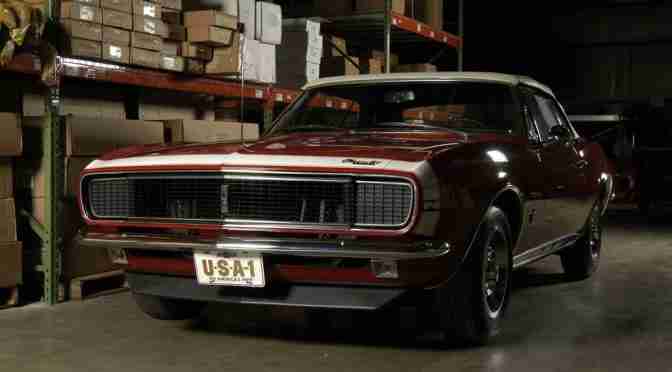
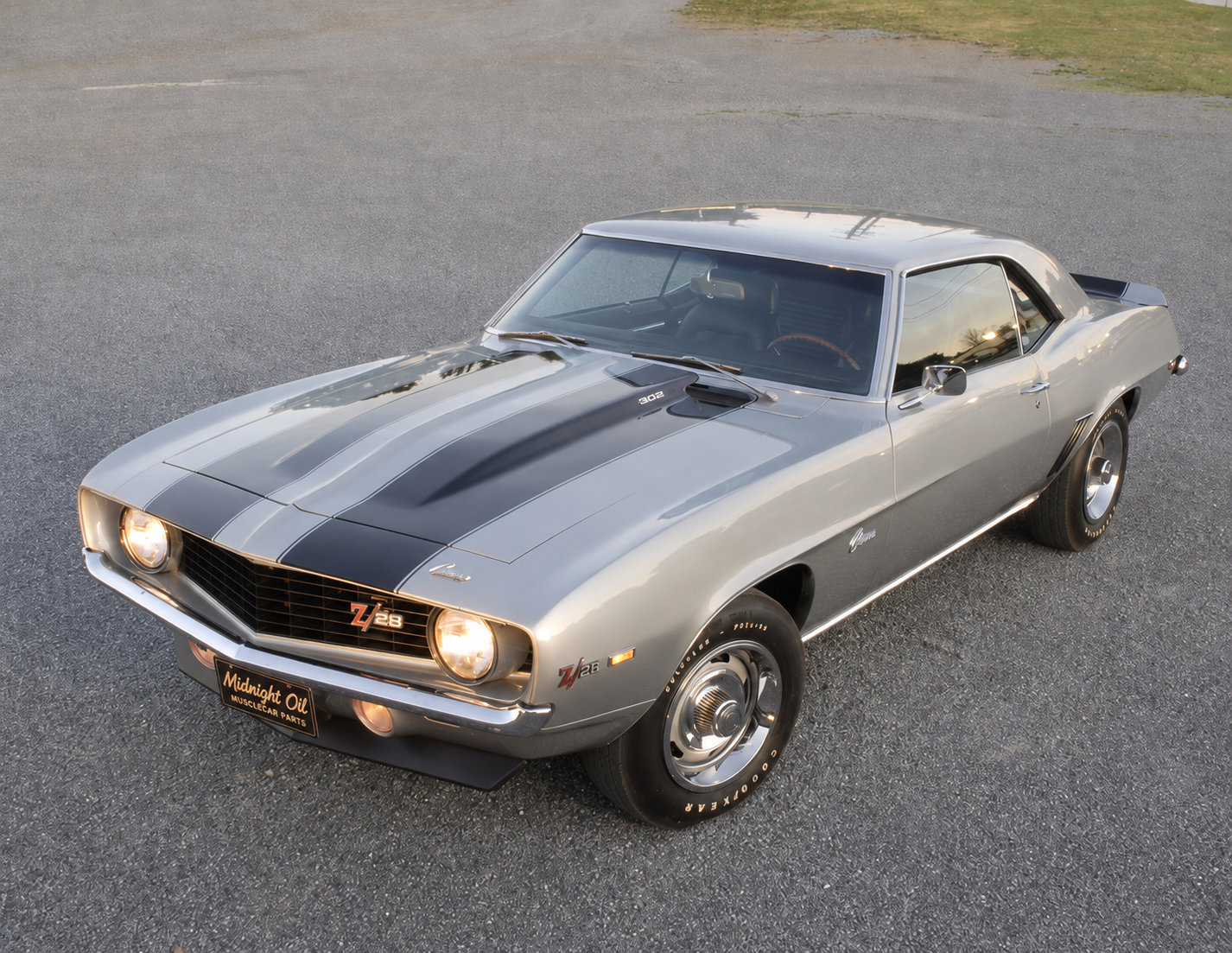
Restoring a 1967-1969 Camaro is not just fitting parts and calling it a day. Truly restoring a First Generation Camaro is bringing back a piece of Chevrolet history to your liking! After all… you will be the one doing most of the driving and getting looks from your friends. Take a look at our guide to get what you need for the level of restoration you are looking for. Midnight Oil Musclecar Parts has all of the 1967, 1968 or 1969 Camaro restoration parts you need for your Camaro.
Step 1: Evaluate what you want do do with your Camaro
- Numbers matching or go the restomod route? Is your car an all original 1969 Z/28 or SS 350 with it’s born-with drive train? Is it just a roller with no engine or transmission? These are just a few questions you need to evaluate before starting your Camaro restoration or ordering the first part. Generally, a numbers-matching show car holds more value than a driver powered by a hot 350 small-block engine, so each Camaro requires a very different restoration approach.
- So, how does the original sheet metal look? Are there any replacement panels already on your Camaro? All Camaros will need some body repair or new sheet metal at some point. So, get out a magnet and go over the car to detect body filler repairs. Too much filler could mean underlying panel issues which could require NOS GM sheet metal pieces or reproduction pieces depending on your level of restoration.
- Check for rust! Camaros generally rust near the rear window to trunk panel and inside the rear window at the package tray, behind the rear wheels and under the cowl panel behind the hood. For the most part, you can use the filler test mentioned above with a visual inspection to find hidden rust issues.
- How does the interior look at a first glance? Are the seats ripped or torn down to the seat foam? Is the headliner hanging down in your Camaro? How does the carpet look? How does the interior chrome look? Lastly, check to make sure the interior electronics are functioning properly because electrical gremlins can add labor dollars to your Camaro restoration.
- Lastly, how does your Camaro visually look and perform mechanically? Does your Camaro weave back and forth without input from you to the steering wheel? When you slow down do the brakes squeal or shudder? How do the tires currently look? We’ve had some come through the shop with the old B.F. Goodrich tires on from 1998! Does the transmission shift smoothly? Do the differential gears whine at highway speeds?
Step 2: Create a Camaro restoration plan
So, you’ve got a bunch of 1969 Camaro restoration parts in mind (or 1967 or 1968). First, let’s lay out the plan!
- Is this going to be a Driver quality restoration? If you are going to use your Camaro as a driver, there would be no need to do a frame-off restoration. Obviously, driver restorations tend to focus more on drive-ability rather than a paint job that looks like a mirror. So, driver restorations should focus on the mechanical side of things, comfort and safety.
- Is this going to be a numbers matching show restoration? This type of restoration can go a couple of different ways. There are different classes for Camaros in the judged classes. A survivor car is just that… a car that is all original and has most of its original born-with parts. So, a 1969 Camaro survivor would not use many restoration parts. The restoration preserves the survivor car by using mostly original GM or NOS (New Old Stock) parts.
- Now, a car which is going the route of a frame-off restoration would have correct finishes (i.e. paint sheen or plating) on all of the parts and components. The paint job would be second to none, the interior would be spotless and you could eat off of the underside. If you were restoring a 1969 Camaro SS 396, it could have a lot of restoration parts on it providing the parts were as good as or better than the original GM parts.
So, this type of restoration follows the path of trying to make the car look better than it came off of the GM assembly line. The restoration plan is much different. Plan accordingly so you don’t have to back track and spend additional funds for mistakes. - Is this going to be a Restomod restoration? The Restomod can be as simple as a driver quality restoration with modern upgrades. Many Camaros will have installed Vintage air conditioning systems, bluetooth radios and some super-comfy seats with 3-point seatbelts. The Restomod usually looks like an original Camaro but has all of the modern bells and whistles. Also, the plan can include a nice original paint job. Create a restoration plan that includes the installation of these new-style parts, then put that plan into action.
- How about a Pro touring or LS swap? We combined these two options together because of their similarities. A pro touring car looks like the original car. However, that is where the similarity ends. Pro touring cars shifts the focus into making an “old dog do new tricks”! A pro touring car focuses on raw performance. More engine (lots of LS swaps going on!), new trick suspension, 6-speed transmissions and custom performance interiors drive this type of restoration. This type of restoration generally favors more raw fabrication and craftsmanship over using off the shelf, bolt on restoration parts.
At this point, we are going to make the assumption that you have decided to tear your car down to the point necessary for the type of restoration you are doing. Also, we are going skip paint and bodywork.. that is another whole article in itself.
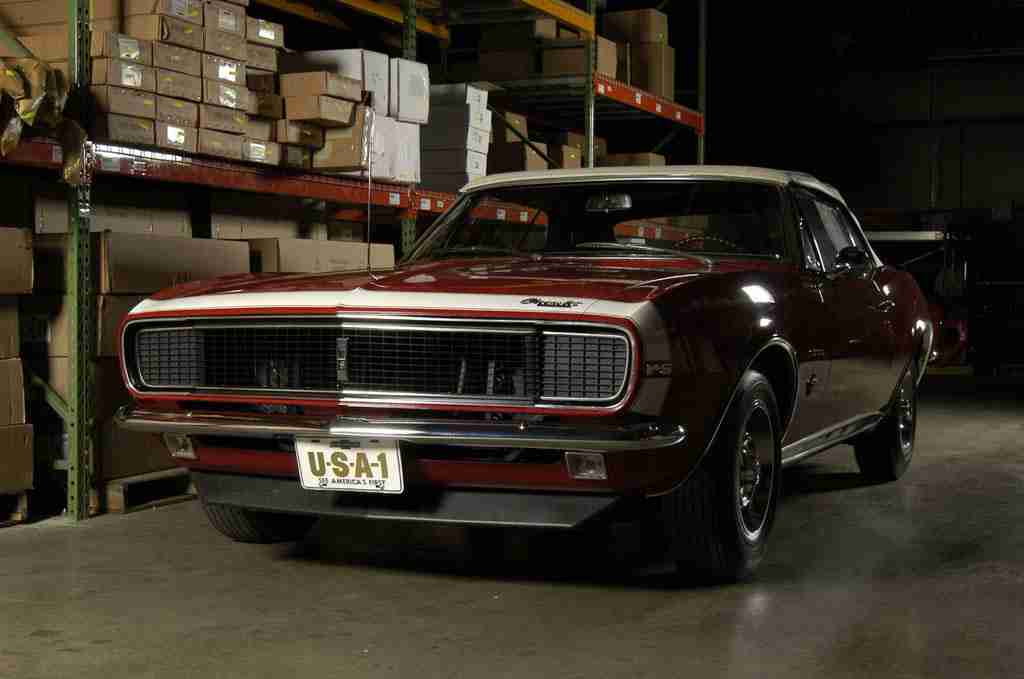
Step 3: Start With Structure and Safety
- Brakes are a good place to stop…er… start! Original drum brakes are more than adequate to stop any First Generation Camaro. But, they can be “grabby” as they wear. Many builders opt to swap to power front discs or 4-wheel disc brake conversions which gives a more modern braking feel. Pro Touring set ups even use gigantic 4 and 6-piston calipers. Manufacturers design these brake systems for the track, but proper tuning makes them equally at home on the street.
- Suspension on the original 1967, 1968 or 1969 Camaro can be daunting when trying to choose restoration parts for this system. Originally, all of the suspension bushings were made from a rubber compound which gave a softer ride. Yep, even the Z28 got regular rubber bushings with some like the anti-sway bar being slightly larger. The offerings today include everything from polyurethane and Delrin to solid aluminum body and suspension bushings. Remember, the harder the compound… the harder the ride.
- Steering is another big consideration for any First Generation Camaro. The original cars came with power steering and manual steering. Power steering was available in fast ratio (2 to 2-1/2 turns lock to lock), variable ratio (3 to 3-1/2 turns lock to lock) and constant ratio (4 to 4-1/2 turns lock to lock). Mixing steering arms and pitman arms can cause your Camaro to turn poorly or faster than you would like. Pro touring cars and some driver cars can use a rack and pinion conversion to make the Camaro turn like a modern car.
- The fuel system more than likely will need some attention too. New Ethanol fuels can wreak havoc on old style hoses causing filter and carburetor clogs. Also, inspect the fuel lines running from the tank to the carburetor and replace any lines showing signs of corrosion or rust. The standard engine driven fuel pump is sufficient for any carburetor fed engine. The Pro touring crowd will need to opt for a fuel tank with an in-tank pump for LS swaps or many aftermarket fuel injection systems.
- Wiring is another system to check and replace carefully. Crusty, old wiring can cause all sorts of malfunctions and even small fires. Show quality and driver restorations can easily get by with just replacing the factory “plug and play” wiring harnesses. Pro touring, LS swaps and sometimes Restomod restorations usually opt for a complete wiring system and run the wires contained in the kit to where they need them. This option works great for Fuel injection, wiring to the LS engine control and aftermarket, custom gauge set ups.
Step 4: Exterior Restoration
- The Grille is usually the first part anyone looking at a First Generation Camaro sees. Look at the 1969 Camaro. It has a plastic grille that you will eventually replace with a restoration part because GM no longer makes the original. 1968 and 1969 Camaros have different color grilles depending on the exterior color of the car originally. Also, the Pro touring and Restomod crowd will use billet aluminum grilles to match their style of Camaro.
- Emblems are another big one! You don’t want to put a nice paint job on any driver, show quality, Restomod or Pro touring and re-use any emblem. That will just make your new paint job look bad. Emblems will degrade and pit over time. Some Brand-X emblems don’t even fit a First Generation Camaro properly. Rest assured that Midnight Oil has only the best emblems available period.
- Replace worn exterior trim such as windshield moldings, wheel well moldings, back glass moldings, and lower body chrome moldings to complete the restoration. Take extra care when removing original pieces, as many moldings are fragile and can bend or dent easily. Dented or bent moldings are just like emblems. They can make or break the paint job.
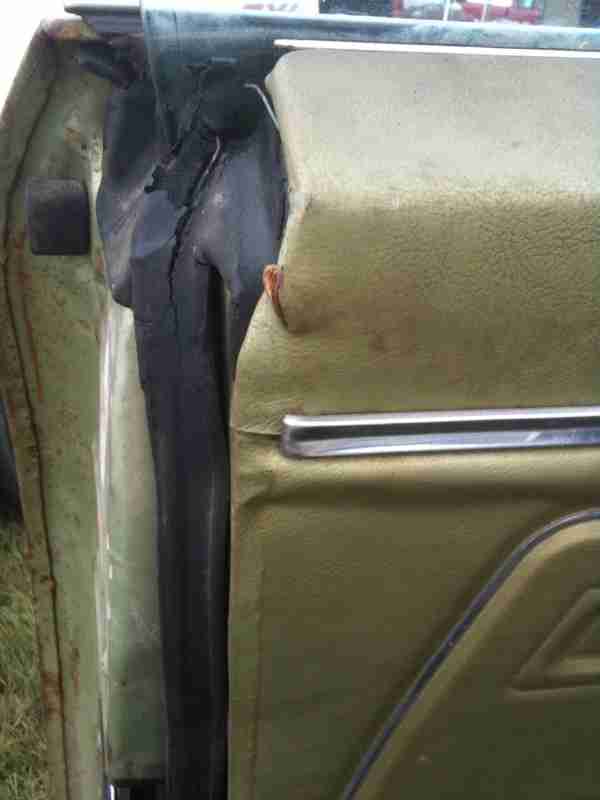
- Weatherstripping and Seals will be addressed at this time as well. Weatherstripping can get old due to exposure to the sun and contact with ozone in the atmosphere. It will crack and shrink allowing dust and water to get inside of your 1967, 1968 or 1969 Camaro. Replacement restoration part weatherstripping is the only option as the supply of NOS GM weatherstripping has all but dried up.
Step 5: Interior Restoration
- Carpet is one of the first things some one will notice when opening the door on your Camaro. Originally, the carpet was an 80/20 loop that was not very color fast. Many black carpets turned to a muddy looking brown or a weird purple over time. The original Camaro carpet is a two-piece. Modern Raylon carpet material is color fast to preserve the color and it is available in the original 80/20 loop or cut pile. Cut pile is a perfect option for the Restomod and Pro Touring folks. Also, we can get carpet in a one-piece for those that don’t care for the two-piece style.
- Seat covers are another big focal point of the interior of your Camaro. GM seat covers are not available any longer. But, we have sourced our seat covers from the original replacement manufacturer to GM. Original First Generation Camaro seat covers were in a Madrid grain vinyl. We have those original style seat covers made the exact same way. Leather seat covers are available for the Pro Touring and Restomod crowd. Need 1969 Camaro Houndstooth restoration part seat covers? No problem!
- Door panels and rear side panels are another almost “must” replace. 1968 and 1969 Camaros have an upholstered piece on top of the door where your arm rests. The 1967 door panel goes under the chrome door molding leaving the top of the door interior colored metal. The interior vinyl door panels in deluxe or standard will absorb oil from your skin and collect dirt. This can leave them looking dirty and dingy. Our interior parts are made just like the original GM door and rear side panels were made.
- You must replace any non-working, cracked or otherwise dash parts and gauges while you are here. The dash pad will crack from exposure to the sun. The First Generation dash pads are more cost effective to replace rather than to try and repair one. Chrome pieces will tarnish from age and oils from your hands. Gauges can fail and give faulty readings. Not good for engine management or trying to make it to the gas station on a Saturday night after a cruise-in.
Step 6: Get The Correct Restoration Parts
Midnight Oil Musclecar Parts has a great selection of First Generation Camaro parts to help with your restoration. If you have a 1967, 1968 or 1969 Camaro and need restoration parts, we’ve got you covered! Thank you for taking the time to read this far and we hope it helps guide you. If you have any questions, please email us at sales@momcp.com Click on the links to visit the categories that correspond with our Restoration Guide: